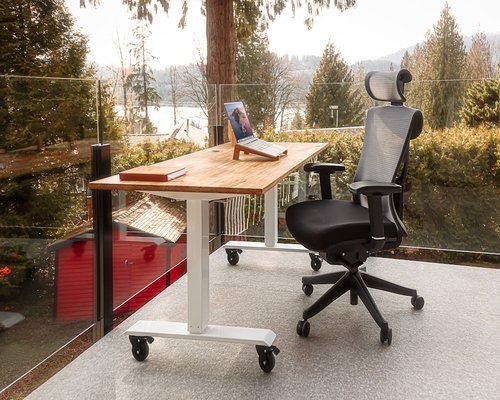
The Importance of Routine
Whether you are taking online classes from an apartment in Mérida or working late hours in a corporate office in Monterrey, the proximity and duration of our screen use define our day. Developing a conscious routine isn't about eliminating technology—it's about engaging with it in a way that prioritizes physical and mental comfort.
When you sit down at your desk, taking a few seconds to adjust your environment can make the difference between a relaxing afternoon and a stressful one. Proper monitor placement and regular interruptions are your best tools.
Mind the Distance
Keep your primary screen roughly an arm's length away. Positioning the top of the monitor at or slightly below your natural gaze promotes a comfortable posture, reducing the tendency to lean forward unconsciously.
Adaptive Brightness
Avoid having your screen be the brightest light source in the room. If the afternoon sun fills your workspace, turn the brightness up; as evening falls, lower it significantly to match the ambient lighting.
The Micro-Pause
Implement brief, frequent pauses. Every 20 to 30 minutes, look completely away from your monitor. Focusing on a distant building or a tree outside your window gives your routine a natural, rhythmic break.
Your Daily Comfort Checklist
Morning Setup
Did you position your chair so that your feet rest flat on the floor, and you aren't fighting the morning glare from the window?
Commute Awareness
Are you limiting reading on your phone during bumpy bus rides? Opt for audio content to give your focus a rest.
Hydration Routine
Do you have a glass of water nearby? Staying hydrated is a foundational part of feeling energetic and comfortable throughout the day.